Key summary
Commonwealth procurement rules are changing how manufacturers and tender teams compete for government work. For covered projects, suppliers now need stronger evidence on emissions, recycled content and circularity, not just broad sustainability claims.
For manufacturers, this means product-level carbon data, recycled content evidence and credible certification can make products easier to specify and easier to include in a Supplier Environmental Sustainability Plan, or SESP.
For tenderers, better supplier data means stronger submissions, clearer reporting and lower greenwashing risk.
Rebuilt helps provide verified Product Carbon Footprints, while GECA adds recognised ecolabel and recycled content verification pathways that strengthen the evidence base behind tender responses.
Sustainability is now part of the procurement test
The Australian Government has changed the rules of the game for Commonwealth work.
Since 1 July 2024, Commonwealth entities procuring construction services above $7.5 million have been required to ask suppliers to plan, commit to and report against environmental sustainability outcomes.
Since 1 July 2025, the same requirement has applied to furniture, fittings and equipment, ICT goods and textiles above $1 million.
That matters because the Government is Australia’s largest buyer. When it changes procurement expectations, markets respond.
For interiors manufacturers, this is a commercial turning point. Recycled content, embodied carbon, circularity and credible certification are becoming part of what makes a product easier to specify, easier to defend in a tender and more valuable in a government supply chain.
For head contractors, fitout companies and project tenderers, the message is just as clear. Your ability to win and retain Commonwealth work now depends in part on the quality, credibility and usability of the sustainability data coming from your supply chain.
What the ESP Policy means for Commonwealth tenders
The Environmentally Sustainable Procurement, or ESP, Policy is administered by the Department of Climate Change, Energy, the Environment and Water and sits alongside the Commonwealth Procurement Rules as a connected policy. It is not aspirational guidance. It is mandatory for procurements covered by the policy.
Phase rollout
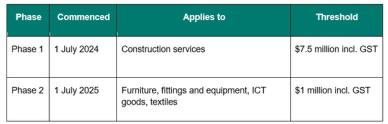
For many interiors manufacturers and fitout supply chains, this means sustainability evidence is no longer a “nice to have” for an occasional green project. It is becoming part of mainstream tender readiness.
What has changed?
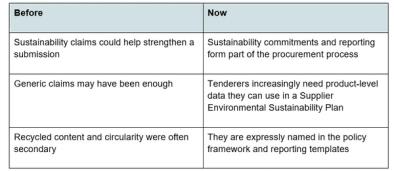
Why the ESP policy matters commercially
This policy is not just a compliance shift. It is a supply chain shift.
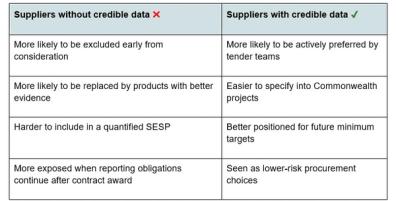
Manufacturers that can provide carbon and recycled content data in a format that tenderers can actually use will be easier to include in Commonwealth submissions. Manufacturers that cannot may become harder to specify, harder to justify and less competitive when procurement teams are under pressure to submit robust environmental commitments.
Tenderers face the same pressure from the other side. If your supply chain cannot provide reliable evidence on recycled content, embodied carbon or circularity, your SESP becomes weaker, more generic and harder to defend.
The commercial reality
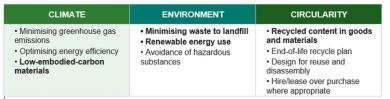
Every tender must address the environmental areas:
The ESP Policy is built around three environmentally focus areas. These are not side notes. They form the basis of what tenderers must address in their sustainability response
Key takeaway
Circularity is not an afterthought. Recycled content is explicitly called out. That means suppliers who cannot substantiate recycled content claims are at a structural disadvantage, especially where tenderers need quantified inputs for reporting.
Why SESP matters in Commonwealth procurement
For covered Commonwealth procurements, tenderers must include a Supplier Environmental Sustainability Plan, or SESP, with their submission. This is not optional supporting material. It is part of the procurement response.
The SESP has two parts:
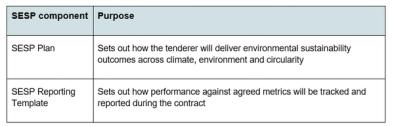
The obligation also does not end at contract award. Suppliers must continue reporting against their commitments at least twice per financial year and again at contract completion.
Why this matters
A broad sustainability statement might help in a marketing conversation. It carries far less weight in a procurement process that requires commitments, metrics and ongoing reporting.
The base metric that put recycled content and embodied carbon in play
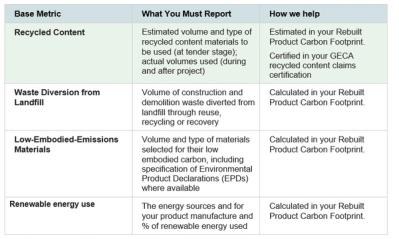
Where a construction procurement does not nominate a specific rating scheme such as Green Star or IS Rating, suppliers report against the SESP Base Metrics. These currently focus on three areas.
The opportunity right now
There are not yet mandatory minimum recycled content thresholds in the current policy settings. That creates a near-term advantage for suppliers who can already provide quantified evidence. Before minimums are imposed, good data can help differentiate a bid on quality and readiness alone.
What tenderers need from manufacturers
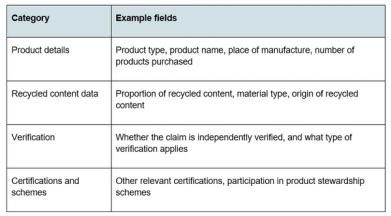
For interiors manufacturers, this is where commercial opportunity becomes practical action. Tenderers cannot make strong SESP commitments unless suppliers can give them credible data in a format they can use.
The reporting template asks for detailed product-level information such as:
What tender teams really need
Tenderers do not just need a brochure claim that says, “contains recycled content”.They need product data that helps them answer questions like:
- What percentage is recycled?
- What material streams does that include?
- Where did that recycled input come from?
- Is the claim independently verified?
- Can this be rolled up into a project-level figure and reported later?
How Rebuilt helps manufacturers and tenderers respond to ESP requirements
Rebuilt helps turn sustainability expectations into evidence that can be used in real procurement processes.
For manufacturers
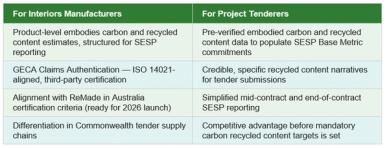
Rebuilt provides product-level recycled content estimates that map directly to what tenderers need for SESP reporting. Instead of broad or unstructured claims, manufacturers can provide data for reporting templates that clearly show:
- percentage of recycled content by mass
- material stream breakdown
- source and traceability of recycled inputs
- a format that can be used more easily in procurement responses
This makes a product more than a catalogue item. It becomes a usable compliance asset for projects and tender teams that need evidence.
GECA’s value in this context goes beyond recycled content alone. GECA’s Furniture Ecolabel standards provide multiple sustainability datapoints that can support tender responses across materials, product safety, circularity, responsible sourcing and environmental performance. When combined with a Rebuilt Product Carbon Footprint to measure embodied carbon, GECA certification can help manufacturers and tender teams meet, and in many cases exceed, key SESP evidence requirements.
For manufacturers not yet ready for full ecolabel certification, GECA’s recycled content verification pathway provides a practical secondary option. It helps suppliers substantiate recycled content claims with independent evidence, reducing greenwashing risk and making those claims more useful in procurement.
Rebuilt is also working with GECA to support a lower-cost recycled content certification pathway for interiors manufacturers. For a small additional fee manufacturers can upgrade their recycled content estimates to a certified claim. This adds an independent certification layer to claims and helps reduce greenwashing risk. It also helps move a claim from marketing language to procurement-grade evidence.
Rebuilt and GECA’s approach is also being developed with reference to emerging certification expectations, including ReMade in Australia. That helps manufacturers build capability now, rather than duplicating work later when procurement expectations tighten further.
For tenderers
For contractors and project teams, the challenge is not just understanding the policy. It is building a sustainability response that is credible, specific and practical to deliver. Rebuilt helps make that possible.
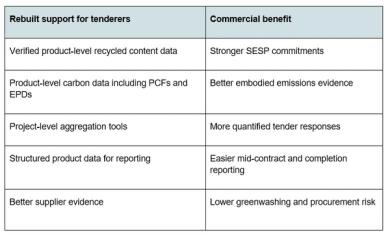
Rebuilt-verified products give tenderers access to pre-calculated, traceable recycled content information that can be rolled up into project-level commitments. That makes it easier to quantify what a project will deliver, rather than relying on vague language.
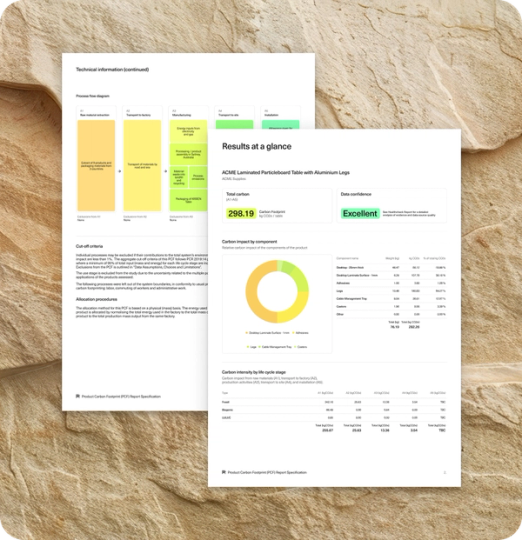
Rebuilt also helps project teams use product-level carbon data through verified Product Carbon Footprints and Environmental Product Declarations. Through the marketplace and project tools, teams can compare products, build bills of materials and estimate embodied emissions across a specification.
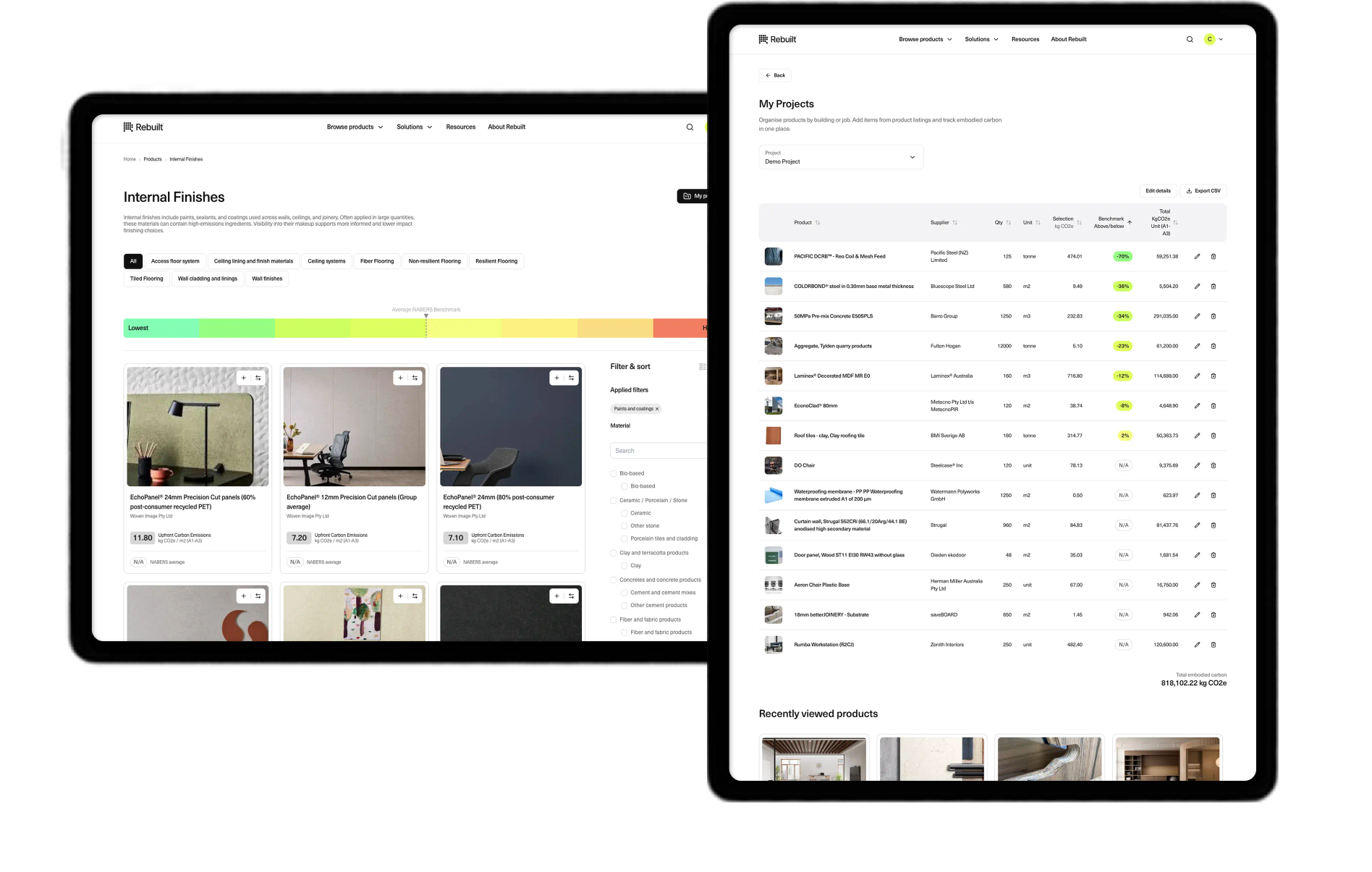
Because the reporting obligation continues during the contract, structured product data also helps reduce the administrative burden later. Instead of chasing suppliers after award, tenderers can work from evidence that was already assembled properly at the start.
Suggested SESP submission wording
As a Rebuilt and GECA customer, you can use the following in your procurement tender submissions to provide confidence in your assertions:
Embodied emissions
“The project specification incorporates product lines carrying third-party verified carbon footprints under ISO 14067, supplemented where relevant by Environmental Product Declarations for key materials. Using Rebuilt’s project tools, we have verified the embodied emissions associated with the nominated specification and used this information to prioritise lower-carbon material selections and strengthen reporting readiness.”
Recycled content
“The fitout specification includes products with documented recycled content data, including independently verified claims where available. This has enabled the project team to estimaterecycled material inputs at tender stage and establish a practical basis for reporting certified actuals during contract delivery.”
Why verification will matter more in Government procurement
The policy’s emphasis on reporting, evidence and accountability reflects a broader shift in government procurement. Sustainability claims that cannot be substantiated carry risk. They are harder to defend, harder to report against and more exposed to scrutiny.
That is why verification matters.
The Rebuilt and GECA pathway helps convert carbon and recycled content claims into evidence that is more credible, more usable and more future-ready. For both manufacturers and tenderers, that means less ambiguity, stronger submissions and better preparation for the next phase of policy development.
The Advantage of Verification
The window is now
The market is already moving. The relevant product categories are already captured. The reporting structure is already in place. This means the question is no longer whether carbon and recycled content evidence will matter in Commonwealth procurement. The question is which suppliers, and tender teams will be ready first.
Those with credible data will be easier to specify, easier to include in a SESP and easier to defend in front of procurement teams and government buyers. Those without them will be left making broad claims in a market that increasingly expects evidence.
What to do next
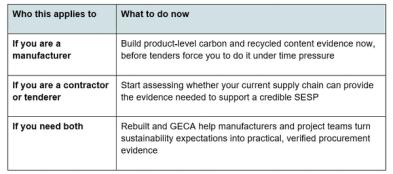
Whether you are a manufacturer looking to verify recycled content and embodied carbon, or a tenderer preparing for an upcoming Commonwealth procurement, Rebuilt and GECA can help you respond with stronger data, more credible evidence and greater confidence.
Discover more
Corporates won’t hit their carbon targets without fixing this data problem
Insights

Recycled, recyclable, or just wishful thinking?
Insights

From product carbon to product innovation, what Rebuilt’s work with furniture manufacturers is showing
Insights

EPD or PCF? How to keep building product-specific data working hard in a capital-constrained economy
Insights

Product Carbon Footprint Labels: Quantifying the Value of Circular Materials in Reshaping Construction
Insights

Make carbon a feature, not a footnote: Turn every chair, workstation, and panel into verified data
Insights