A tier 1 property developer chasing net positive Scope 3 by 2030 had one key glazing supplier, many product variants, an offshore supply chain, and no verified way to quantify the embodied carbon. Estimates, averages and best guesses were the only carbon numbers on hand.
Rebuilt independently verified the carbon footprint of their primary window unit, reviewing full technical documentation and applying a confidence scale to every figure, so their customers could report with certainty instead of assumption. The resulting verified data can now be scaled to evaluate the actual emission at supplier and contract scale. More accuracy. more confidence. Less time.
The result: a 23% saving on emissions from the glazing package alone, and a 3% saving across the entire development — verified, not estimated.
Discover more
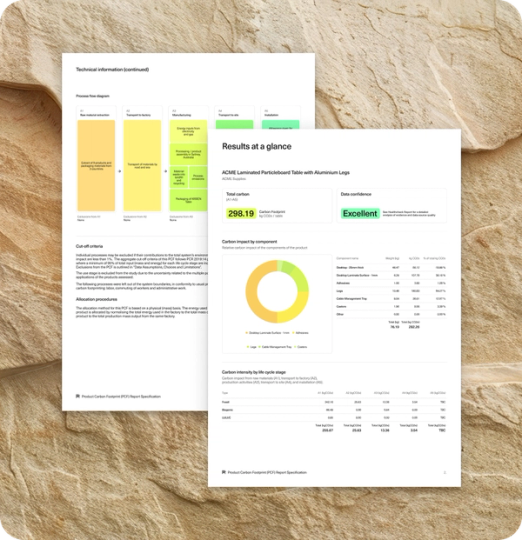
Corporates won’t hit their carbon targets without fixing this data problem
Insights
EPD or PCF? How to keep building product-specific data working hard in a capital-constrained economy
Insights

From product carbon to product innovation, what Rebuilt’s work with furniture manufacturers is showing
Insights

Recycled, recyclable, or just wishful thinking?
Insights

Product Carbon Footprint Labels: Quantifying the Value of Circular Materials in Reshaping Construction
Insights

Make carbon a feature, not a footnote: Turn every chair, workstation, and panel into verified data
Insights